The Real Cost of a Paper File


Ask most organisations what their paper files cost and they will point to printing, cabinets and storage rooms. Those costs are real, but they are the smallest part of the bill.
The expensive part of a paper file is everything that happens around it: the waiting, the searching, the copying, and the decisions made by people who cannot see it.
Waiting is the biggest cost, and nobody measures it
A file that needs five signatures does not take five minutes. It takes as long as it sits in each in-tray, plus the walk between offices, plus the days when the person who signs is away.
On paper, that waiting is invisible. Nobody records when a file arrived at a desk or how long it stayed. So the delay never shows up in a report, and nobody is asked to fix it.
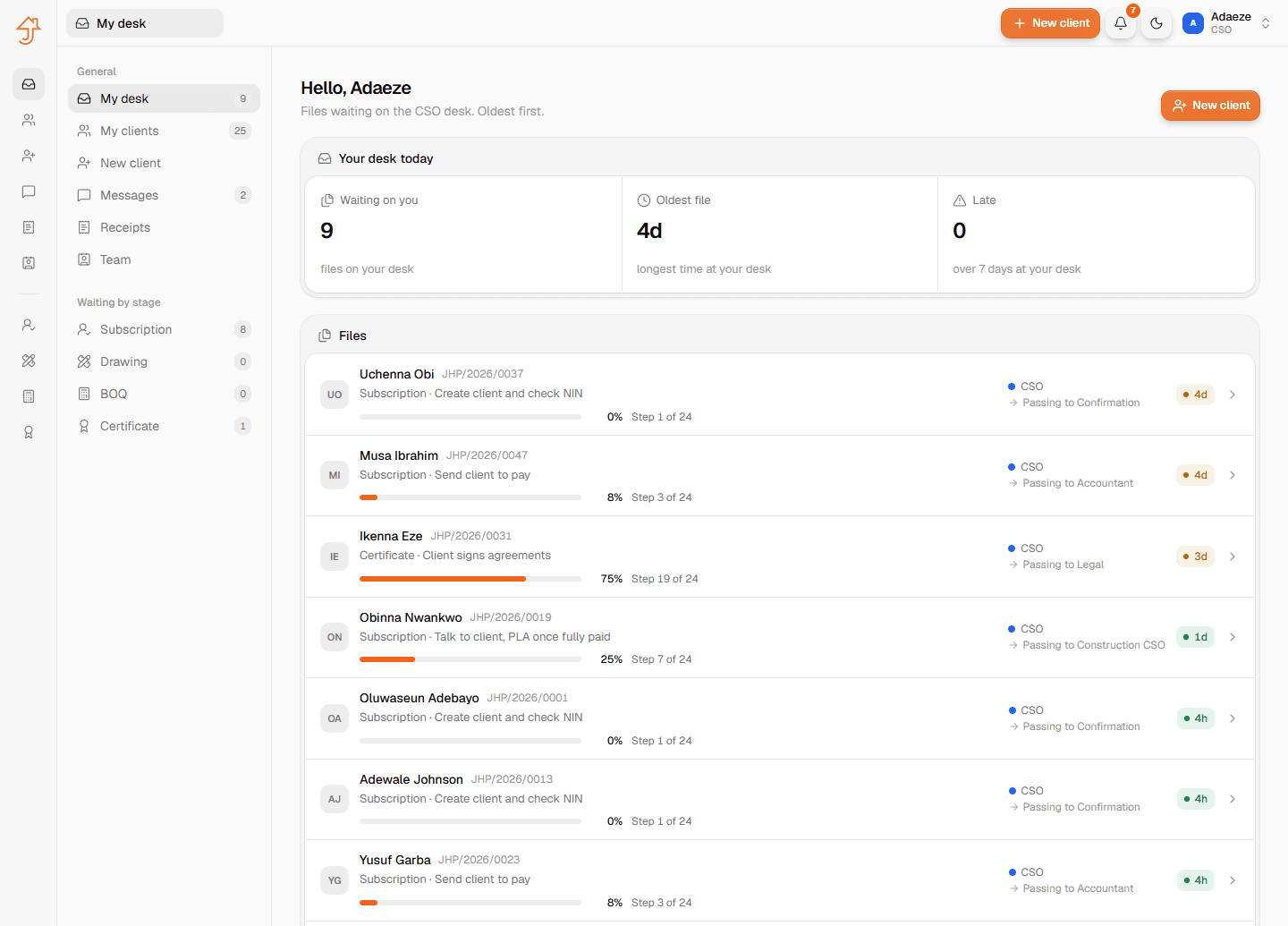
When the same file becomes digital, every arrival and every handoff carries a timestamp. A desk sees its oldest file first. Leadership sees which files have waited longest and where. The waiting does not disappear overnight, but it can finally be managed.
Searching is time you pay for twice
Every minute a staff member spends looking for a file is a minute paid for and lost. Every time a member of the public is told to come back next week because the file cannot be found, the organisation also pays in trust.
A searchable record answers in seconds the question that used to take a morning: where is this file, who has it, and what is it waiting for.
Paper cannot enforce your own rules
Most institutions have good rules. The person who records a payment should not be the person who confirms it. A file should not skip the legal review. Nothing should be thrown away.
Paper relies on everyone following those rules every time. A digital system can simply make the wrong action impossible, and record the right one with a name and a time.
Decisions made without information
The most expensive cost is the hardest to see. When leadership cannot see the organisation between meetings, decisions are made on old reports, summaries and anecdotes. Problems surface weeks after they start.
That is why we start every engagement with an operations assessment: following real files through real offices, timing each step, and putting a number on what the waiting costs before we propose anything.
Where to start
- Pick one process that matters to leadership and touches several offices.
- Follow ten real files through it, from start to finish, and write down every handoff.
- Note how long each file waited at each desk.
- Ask what leadership would decide differently if it could see that picture every morning.
The answer to the last question is usually the business case.